AULA F75 or AJAZZ AK820 Pro: which 75% keyboard fits a quieter desk better?
This guide may earn a commission when readers buy through affiliate links.
Quick verdict
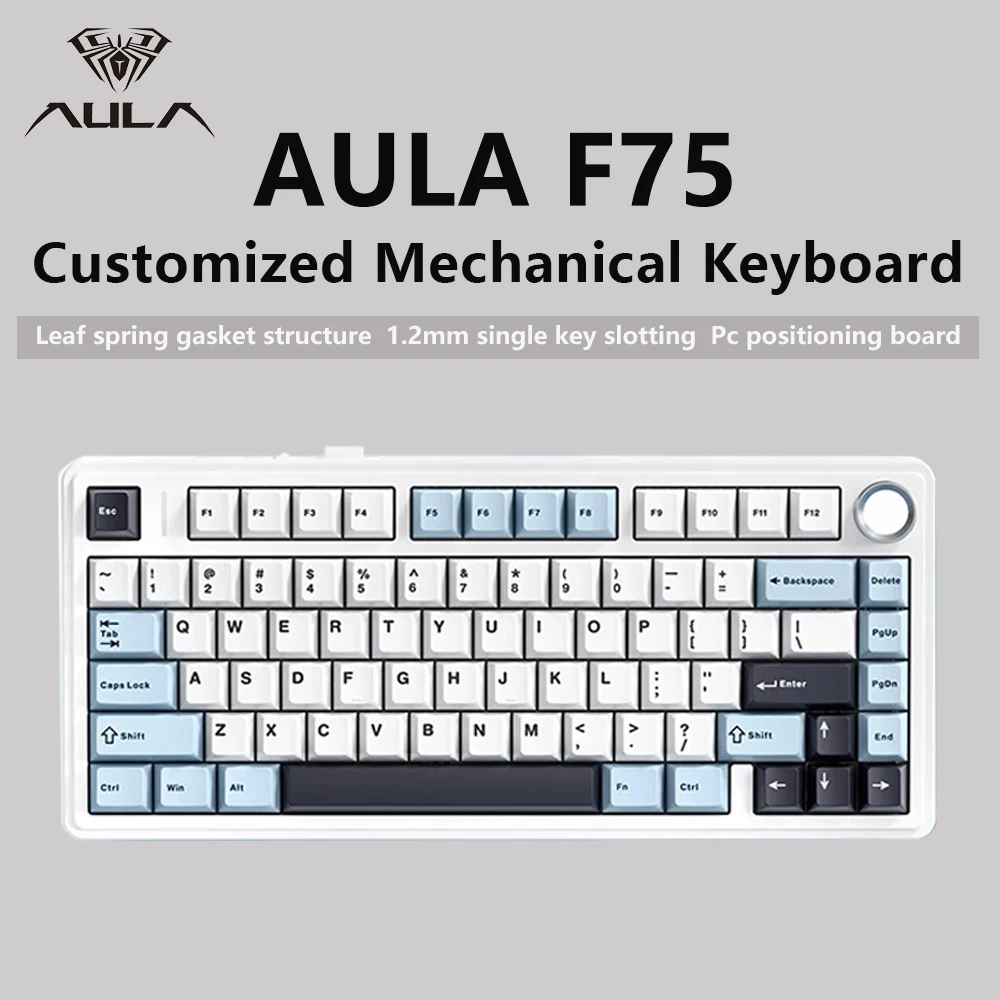
The AULA F75 is the easier value pick if you want a softer-feeling 75% keyboard with heavier social proof and fewer reasons to tinker on day one.
The AJAZZ AK820 Pro makes more sense if a knob, screen-style flair, and a slightly more gadget-like desk presence matter more than the safer mainstream pick.
Skip both if you mainly need a truly quiet office board. These are still enthusiast-style compact keyboards, not silent tools.

AULA F75 and AJAZZ AK820 Pro sit in the same part of AliExpress for a reason. Both promise the compact 75% layout, wireless flexibility, and the kind of enthusiast styling that looks far more expensive than a basic office keyboard. The difference is that one feels like the safer mass-market buy, while the other leans harder into feature flavor.
| Pick | Best for | Visible signal | Main watch-out |
|---|---|---|---|
| AULA F75 | Most people who want one solid 75% board | 4.9 rating, 10,000+ sold, widely repeated listing | Still not a truly quiet office keyboard |
| AJAZZ AK820 Pro | Buyers who want more flair and knob-forward styling | 4.9 rating, 5,000+ sold, multiple active listings | Value depends on whether the extra personality matters to you |
Get the AULA F75 if
You want the less risky pick, stronger sold-count proof, and a board that feels easier to recommend without a long caveat list.
Get the AJAZZ AK820 Pro if
You care about the feature-forward look, want the knob-led control style, and do not mind a board that feels a bit more like a hobby purchase.
Skip both if
Your real priority is library-level silence, south-facing niche switch compatibility, or a premium brand ecosystem with stronger long-term software trust.
If the keyboard decision is really part of a small-desk cleanup, the tiny desk lighting guide is worth opening next.
AULA F75
Selection reason: This is the safer answer because the sold-count signal is much stronger and the overall package is easier to justify for people buying one compact keyboard instead of building a collection.
Use case: Mixed work-and-play desks, first-time 75% buyers, and anyone who wants a wireless mechanical board without turning the purchase into a project.
Standout point: The visible sales momentum gives it a little more trust when you are buying from a marketplace where listing variance matters.
Watch-out: The styling is still enthusiast-coded, and the sound profile will depend heavily on switch choice and desk surface. Quiet-looking does not automatically mean quiet in use.
AJAZZ AK820 Pro
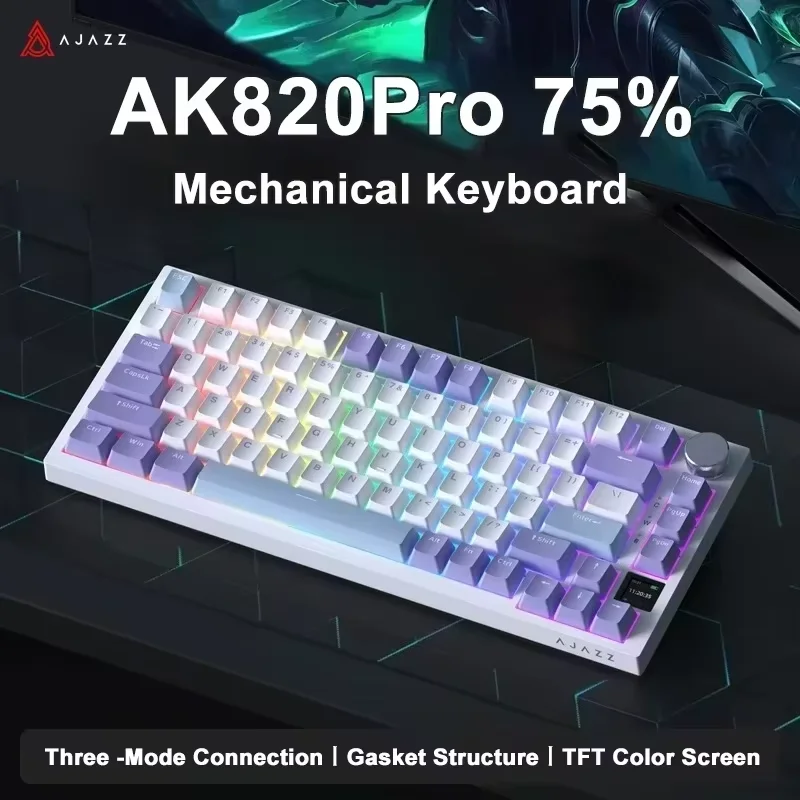
Selection reason: This one belongs on the shortlist because it offers the same compact category fit while leaning harder into the “feature toy” side of the experience.
Use case: Buyers who want a compact board that feels more visually distinctive on a setup and do not mind choosing with more taste than pure caution.
Standout point: It has enough market traction to be credible, but it still feels more personality-driven than the default safe buy.
Watch-out: If the knob-and-feature angle is not part of your decision, the gap between this and the AULA can start to feel cosmetic rather than practical.
Check the AJAZZ AK820 Pro listing
Alternative
The honest alternative is waiting a week and deciding whether you want a quieter typing tone or just a more compact layout. A lot of people shop these boards as if they solve the same problem, then realize the bigger decision was noise tolerance all along.
Safer overall buy: AULA F75.
Better if you want more personality: AJAZZ AK820 Pro.
Skip it if: you need true office quiet, not just a smaller footprint and nicer desk aesthetics.
This guide is based on official specs, seller listings, price ranges, and repeated buyer pain points. It is not presented as a hands-on lab test when no hands-on test was done.
FAQ
Is this a hands-on test?
No. This guide is a buying decision brief built from official specs, seller listings, pricing ranges, and repeated buyer pain points. It should be used as a checkout filter, not a lab review.
What should I check before buying?
Check desk width, cable direction, mounting space, brightness needs, and whether the upgrade removes a daily desk problem.
When should I skip both options?
Skip both if your desk problem is posture or chair height rather than the accessory itself.